
Keycap Stem Compatibility: MX, Low-profile, Topre & Alps
The shape under a keycap decides whether it can attach to a switch. Learn the major stem families, why low-profile is not one universal standard and how to verify your keyboard before buying.
Keycap Sizes, Bottom Rows & Spacebars: A Practical Fit Guide
Keycap compatibility is measured one position at a time. This guide explains keycap units, bottom-row patterns, spacebar sizes and the exact checks that prevent one unusual key from spoiling an otherwise perfect set.
How Thekapco Makes a Keycap Set
See how Thekapco turns artwork into a production-ready keycap set through briefing, material and profile decisions, kit planning, sampling, revision, QC and launch.
How to Choose Your First Keycap Set
Choose your first keycap set in this order: confirm fit, select a comfortable profile, decide how you want the surface and lighting to behave, then choose the design you genuinely enjoy.
Thekapco Keycap Glossary: The Terms Beginners Actually Need
Keycap terminology becomes easier once you separate five ideas: how a cap mounts, where it sits, how large it is, what shape it has and how it was made.

Introducing Thekapco x Peanuts‘25 Collection
Peanuts ’25 Collection A Journey Through Space & Streets The Peanuts universe has always held a special place in our hearts, timeless, imaginative, and filled with iconic moments that have shaped generations. For 2025, we’re bringing that magic straight to your desk with two uniquely crafted collections: Thekapco x Peanuts | Vintage Astronaut Keycaps (Left) and Thekapco x Peanuts | Urban Japan Keycaps (Right). Each series highlights a different side of Snoopy and his world, designed for collectors, dreamers, and keyboard enthusiasts alike. Vintage Astronaut A Retro Adventure Beyond the Stars Inspired by Snoopy’s iconic role as NASA’s safety ambassador and his decades-long connection with space exploration, the Vintage Astronaut Collection brings back the charm of old-school space missions. Thekapco x Peanuts | "Vintage Astronaut Collector's Bundle - 1969" Thekapco x Peanuts | Vintage Astronaut Collector's Bundle - Fly me to the moon Thekapco x Peanuts | Vintage Astronaut Collector's Bundle - Departure Urban Japan Snoopy in the Neon Streets The Urban Japan Collection brings Snoopy and the Peanuts gang into a modern, neon-lit city inspired by Tokyo’s dynamic culture. Think bustling crossings, street food stalls, and late-night anime-style glow. Thekapco x Peanuts | Urban Japan Collector's Bundle - Manga Strip Thekapco x Peanuts | Urban Japan Collector's Bundle - Red Urban Thekapco x Peanuts | Urban Japan Collector's Bundle - Red Echo Artisan Keycap The Peanuts ’25 Collection also features a premium solid aluminum artisan keycap, designed to bring Snoopy’s iconic imagery to life in a collectible miniature form. Each piece is precision-milled for sharp detailing and finished with high-quality coatings that enhance its durability and visual depth. Featuring Snoopy in his Vintage Astronaut Artisan (Left) & Urban Japan Artisan (Right) suit, this artisan adds a striking centerpiece to any keyboard setup. And with only 500 pieces available worldwide, it’s a highly sought-after collectible compatible with all MX-style switches, perfect for fans who appreciate both artistry and craftsmanship. 💛 A Collector’s Dream for Peanuts Fans With both the Vintage Astronaut and Urban Japan collections capped at 500 sets globally, this release is more than a themed drop, it’s a rare opportunity to own officially licensed Peanuts merch that only a small number of fans across the world will ever have. Create Your Perfect Snoopy Setup with the Peanuts ’25 Collection We’re proud to introduce the Thekapco x Peanuts ’25 Collection and share these reimagined worlds with the community. Whether you’re drawn to Snoopy’s starry cosmic adventures or the vibrant charm of Urban Japan, each design brings joy, personality, and a touch of magic to any desk setup. Beyond the curated bundles shown above, every item in the collection is also available as a single purchase, perfect for those who prefer to mix and match and create a setup that’s uniquely their own. Explore the full lineup on our website and discover your favorite Peanuts moment brought to life.
Are Thocky Keyboards Worth It? A Practical Sound Guide
A thocky keyboard can be worth it if you genuinely enjoy the sound and the board still suits your work, gaming and shared space. Build quality and tuning matter more than chasing one magic part.

Artisan Keycaps: The Complete Buying and Collecting Guide
An artisan keycap is a decorative or collectible keycap whose material, sculpt, finish or production gives it an identity beyond a standard set. Some are hand-cast or hand-painted; others are machined, printed or produced through several processes. Before buying, verify the stem, size, height, weight, clearance, maker, edition terms and care instructions.

Double-Shot vs. Dye-Sublimation Keycaps: Which One Lasts Longer?
"Discover the key differences between double-shot and dye-sublimation keycaps in terms of durability, typing experience, sound, price, and more. Learn which keycap type lasts longer and is the best choice for your mechanical keyboard."

Are OLED Displays on Keyboards the Next Big Thing? | The Future of Keyboards
“Are OLED Displays on Keyboards the Next Big Thing? | The Future of Keyboards” Thekapco PLAY 1800 In the ever-evolving landscape of technology, keyboards have undergone significant transformations. From mechanical and membrane-based designs to RGB backlighting, the next frontier appears to be OLED displays integrated into keyboards. With major brands like Razer, SteelSeries, and Apple exploring this innovation, many are asking: Are OLED displays on keyboards the next big thing? What Are OLED Keyboards? Asus Azoth keyboard OLED (Organic Light-Emitting Diode) technology allows for bright, high-contrast displays with deep blacks and vibrant colors. Unlike traditional keycaps, OLED keyboards replace or augment standard keys with mini displays, enabling dynamic changes based on user preferences. How an OLED Screen Can Level-Up Your Keyboard Experience OLED keyboards introduce a whole new level of interaction and personalization. Here’s how they can revolutionize your typing and gaming experience: 1. Adaptive Key Functions Imagine a keyboard where each key’s function changes depending on the application you’re using. Whether you’re editing videos, coding, or gaming, OLED keys can dynamically display relevant shortcuts, eliminating the need to memorize complex commands. 2. Real-Time Feedback For gamers and professionals, real-time system stats, notifications, and alerts can be displayed directly on the keyboard. Temperature monitoring, CPU usage, stock updates, or game cooldown timers are just a glance away, keeping you in the loop without switching windows. 3. Multimedia Control An OLED keyboard can act as a secondary control panel for music, video playback, or streaming. Adjusting volume, switching tracks, or managing your playlist becomes more intuitive with real-time visuals. 4. Seamless Integration with Smart Devices Some advanced OLED keyboards can integrate with smart home devices, displaying notifications, weather updates, or even acting as a mini-dashboard for IoT controls. Best OLED Keyboards in 2025 If you're interested in experiencing the benefits of OLED keyboards, here are some top options: 1. SteelSeries Apex Pro Features a customizable OLED Smart Display for notifications and settings Adjustable mechanical switches for personalized key actuation Sturdy aluminum frame with RGB backlighting 2. Corsair K100 RGB Built-in OLED display with macro functionality Optical-mechanical switches for fast response times Customizable RGB and advanced onboard storage 3. Asus ROG Azoth OLED display for system monitoring, animations, and battery status Gasket-mounted design for improved typing feel Tri-mode connectivity with wired, Bluetooth, and 2.4GHz wireless options 4. Apple Magic Keyboard with Touch Bar (Conceptual) While not fully released, Apple has explored integrating OLED technology into keyboards through the Touch Bar, offering dynamic shortcuts and context-based controls. Benefits of OLED Displays on Keyboards 1. Customization Like Never Before OLED keyboards offer unparalleled customization, displaying key labels, macros, and shortcuts tailored to specific applications. Whether you're a gamer, programmer, or content creator, OLED keys can adapt to your workflow seamlessly. 2. Enhanced Aesthetics With vivid colors and crisp visuals, OLED keyboards add a futuristic look to any setup. Users can personalize their keyboards with animations, live wallpapers, or dynamic content that enhances the overall experience. 3. Increased Productivity For professionals, OLED keyboards can display real-time system information, notifications, or application-specific tools. Video editors, designers, and traders can benefit from dedicated function keys that change dynamically based on their needs. 4. Gaming Advantages Gamers can assign game-specific controls, displaying cooldown timers, health stats, or interactive elements directly on the keyboard. This could significantly improve response time and efficiency in competitive gaming. Challenges and Considerations 1. Durability Concerns OLED screens are more delicate than traditional keycaps. Constant use may result in burn-in issues or screen degradation over time. 2. Battery Consumption For wireless keyboards, OLED displays may drain battery life faster than traditional LED or membrane-based alternatives. 3. Price Factor Currently, OLED keyboards are considered a luxury item, with premium pricing limiting their accessibility to a niche market. The Future of OLED Keyboards As OLED technology becomes more affordable and durable, the adoption rate for OLED keyboards is likely to rise. Tech enthusiasts and professionals alike may find OLED keyboards essential for a more immersive and efficient user experience. Frequently Asked Questions (FAQ) 1. Are OLED keyboards worth it? If you prioritize customization, real-time data display, and enhanced aesthetics, OLED keyboards can be a great investment. However, they are generally more expensive and may have durability concerns. 2. Do OLED keyboards suffer from burn-in? Like any OLED display, prolonged static images can cause burn-in over time. However, many modern OLED keyboards include features to prevent this, such as screen savers and pixel shifting. 3. Are there wireless OLED keyboards? Yes! The Asus ROG Azoth is an example of an OLED keyboard that supports wireless connectivity via Bluetooth and 2.4GHz wireless. 4. Can I customize an OLED keyboard’s display? Most OLED keyboards allow customization through software. You can set up animations, macros, notifications, and real-time system stats to be displayed. 5. Which OLED keyboard is best for gaming? The SteelSeries Apex Pro and Asus ROG Azoth are excellent choices for gaming, offering fast response times and customizable OLED displays. 6. Are OLED keyboards compatible with Mac? Some OLED keyboards, like the SteelSeries Apex Pro, support Mac. However, always check manufacturer specifications for full compatibility. Conclusion OLED keyboards are still in their early stages, but they hold massive potential to redefine the way we interact with our devices. Whether they become a mainstream necessity or remain a high-end niche product depends on advancements in technology and market demand.
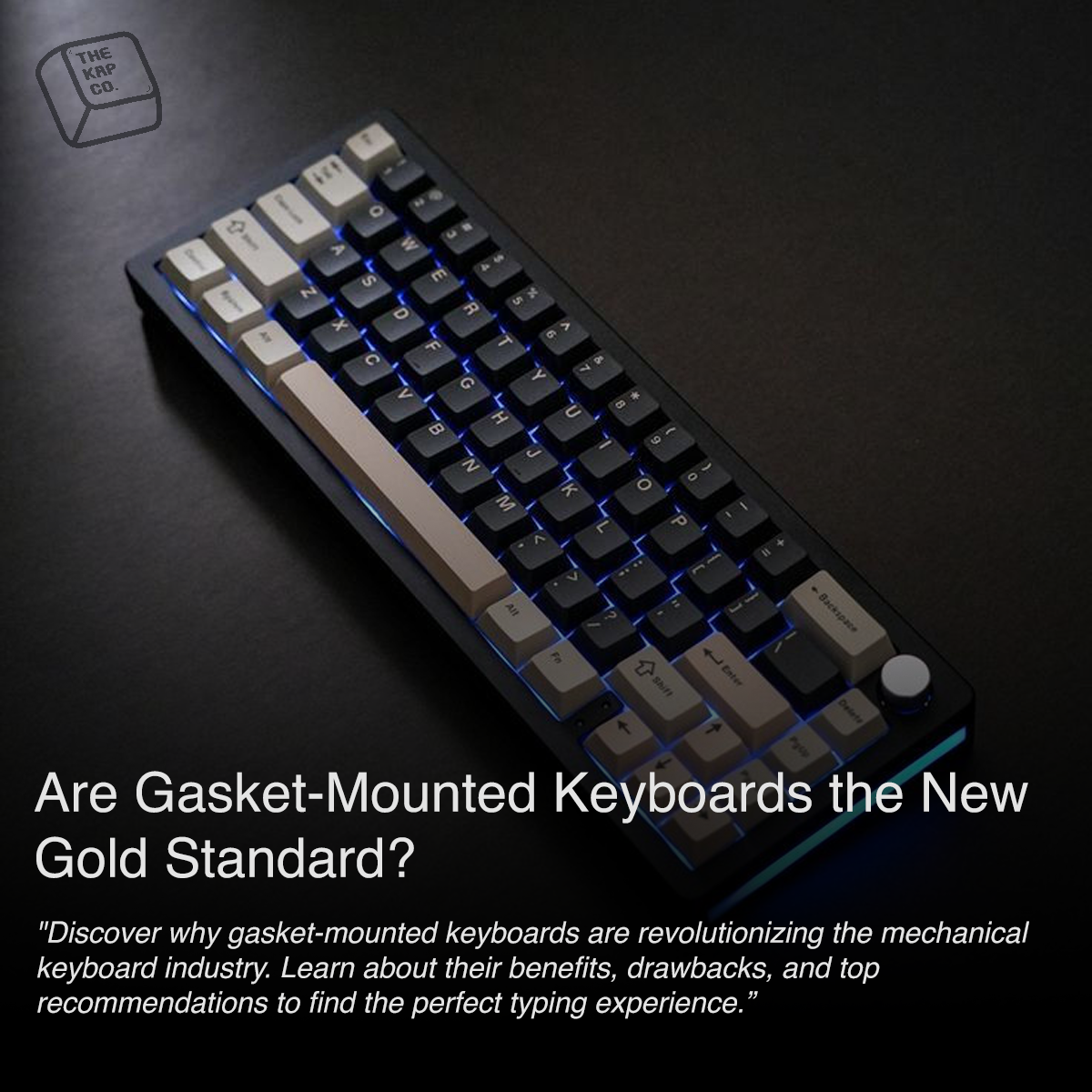
Are Gasket-Mounted Keyboards the New Gold Standard?
Are Gasket-Mounted Keyboards the New Gold Standard? In the world of mechanical keyboards, innovation is constant, with new mounting styles emerging to enhance the typing experience. One of the most talked-about developments in recent years is the gasket-mounted keyboard. Enthusiasts and professionals alike are praising its unique feel and sound. But is it truly the new gold standard in mechanical keyboards? Let’s explore what makes gasket-mounted keyboards stand out, how they compare to other mounting styles, and whether they are worth the hype. What is a Gasket-Mounted Keyboard? A gasket-mounted keyboard refers to a specific mounting style where the keyboard plate is suspended between layers of soft material, such as silicone, foam, or rubber gaskets. This mounting method reduces direct contact with the case, providing a cushioned typing feel and superior sound dampening compared to traditional tray or top mounts. The key characteristic of a gasket-mounted keyboard is its ability to absorb vibrations and distribute keystroke pressure more evenly, resulting in a smoother and more comfortable typing experience. This mounting method is often used in high-end and custom keyboards, but it is gradually becoming more common in mainstream models due to its popularity among enthusiasts. Key Benefits of Gasket-Mounted Keyboards 1. Enhanced Typing Comfort One of the primary advantages of gasket-mounted keyboards is the improved typing experience. The gaskets create a soft and flexible typing feel, reducing finger fatigue and making long typing sessions more comfortable. The slight flex of the plate allows for a more cushioned bottom-out, which many users find to be a game-changer compared to rigid mounting styles. 2. Superior Acoustic Performance Gasket-mounted keyboards absorb vibrations better than traditional mounting styles, leading to a more refined sound profile. The result is a quieter, more satisfying typing experience, with less metallic pinging or case reverberation. Depending on the materials used, this mounting style can produce a deep, thocky sound or a softer, muted tone, both of which are highly desirable among keyboard enthusiasts. 3. Better Flex and Bounce Compared to rigid tray-mounted keyboards, gasket-mounted designs allow for more flex and bounce, providing a slightly bouncier and more responsive typing experience. This is especially appealing to users who prefer a softer keypress. The amount of flex can vary depending on factors such as plate material, gasket density, and case construction. 4. Premium Build Quality Many high-end custom keyboards now use gasket mounting because it offers a more luxurious feel. Manufacturers are increasingly adopting this design to cater to enthusiasts seeking top-tier typing experiences. The soft mounting method minimizes harsh impacts between the plate and case, resulting in a more refined and high-end keyboard feel. 5. Increased Customization Potential Another significant advantage of gasket-mounted keyboards is the ability to fine-tune the typing experience. Enthusiasts can experiment with different plate materials (such as aluminum, polycarbonate, or brass), gasket firmness, and case dampening to achieve their preferred sound and feel. This level of customization makes gasket-mounted keyboards a favorite among mechanical keyboard hobbyists. Potential Drawbacks of Gasket-Mounted Keyboards 1. Higher Cost Due to the additional materials and more complex construction, gasket-mounted keyboards are generally more expensive than traditional tray-mounted options. This may not be ideal for budget-conscious consumers. High-end materials such as aluminum or polycarbonate cases, combined with silicone or foam dampening, further increase production costs. 2. Limited Availability While the popularity of gasket mounts is rising, they are still less common in mainstream pre-built keyboards. Most gasket-mounted options are found in custom builds or premium models. This means that users who want to experience gasket mounting may have to invest in DIY kits or group buys, which can be costly and require assembly skills. 3. Subjective Feel Preference While many users appreciate the softer typing feel, some may prefer the firmness of a top-mount or tray-mount keyboard. Ultimately, choosing the right mounting style depends on personal preference. Competitive gamers, for example, may prefer a stiffer keyboard for quick actuation and responsiveness. 4. Potential for Too Much Flex While some users love the flex of gasket-mounted keyboards, others may find that excessive flex makes typing feel unstable. Finding the right balance between flexibility and structural integrity is crucial when selecting a gasket-mounted keyboard. How Do Gasket-Mounted Keyboards Compare to Other Mounting Styles? Source from Thomas Baart Tray Mount vs. Gasket Mount Tray-mounted keyboards, which are common in budget-friendly pre-built models, involve securing the PCB and plate directly to the case using screws. While simple and cost-effective, this method results in a firmer typing experience with little flex. Gasket-mounted keyboards, in contrast, offer a more refined feel and better sound dampening at a higher cost. Top Mount vs. Gasket Mount Top-mounted keyboards use screws to attach the plate to the top of the case, offering a slightly flexible but still firm typing feel. While top-mount keyboards provide better acoustics than tray-mount keyboards, they lack the cushioning effect and uniform sound profile of gasket-mounted designs. Leaf Spring Mount vs. Gasket Mount Leaf spring mounting is another premium mounting style that provides excellent flex and a unique typing experience. Unlike gasket mounting, which relies on soft materials to absorb vibrations, leaf spring mounts use metal springs to provide controlled flex. While both offer a soft feel, leaf spring mounts may have a more distinct and bouncier feedback. Here's a detailed table comparing gasket-mounted keyboards with other mounting styles: Are Gasket-Mounted Keyboards the New Gold Standard? AJAZZ AC067 Cheese The answer depends on what you prioritize in a keyboard. If you value comfort, sound dampening, and a more premium typing feel, then gasket-mounted keyboards may indeed be the gold standard for you. However, traditional mounting styles still have their place, particularly for those who prefer a firmer, more responsive typing experience. With an increasing number of brands adopting gasket mounting in their high-end and even mid-range keyboards, it's safe to say that this design is shaping the future of mechanical keyboards. Whether you are a casual typist or a hardcore keyboard enthusiast, gasket-mounted keyboards are worth considering for their superior comfort and acoustics. Here are some great gasket-mounted keyboards to consider: Best Gasket-Mounted Keyboards If you're considering a gasket-mounted keyboard, here are some top options: 1. Keychron Q Series (Q1/Q2/Q3/Q4) CNC aluminum build VIA/QMK support for customization Premium typing feel 2. GMMK Pro 75% layout with customizable plate High-quality materials Great modding potential 3. Mode Sonnet Modular mounting options Premium build quality High-end price 4. Zoom65 by Meletrix Wireless support Affordable for its features Available in multiple colors 5. Akko MOD 007 V2 Budget-friendly gasket mount option Hot-swappable switches 6. Ikki68 Aurora Polycarbonate case for unique aesthetics Customizable typing experience 7. Bakeneko60/65 Simple but highly effective design Great for enthusiasts who enjoy tuning their keyboards Conclusion Gasket-mounted keyboards offer an innovative approach to mechanical keyboard design, emphasizing a softer, quieter, and more premium typing experience. While they may not completely replace traditional mounting styles, their growing popularity suggests that they are here to stay. If you're looking for a top-tier keyboard experience, a gasket-mounted option might be your next best investment.
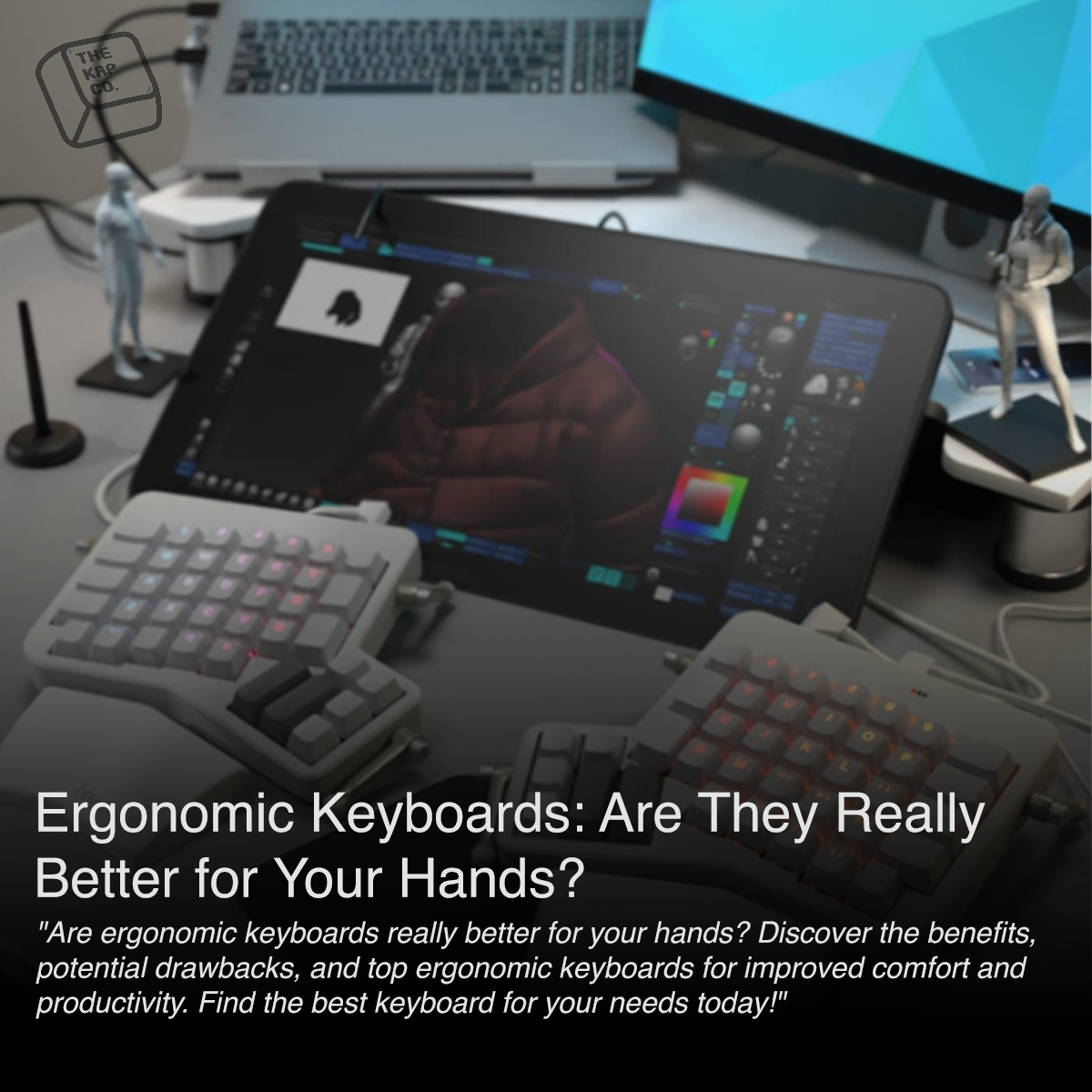
Ergonomic Keyboards: Are They Really Better for Your Hands?
Ergonomic Keyboards: Are They Really Better for Your Hands? Keychron Q14 Max In today’s digital world, where most of us spend hours typing at a desk, hand and wrist pain have become common complaints. Ergonomic keyboards claim to be the solution, offering better hand positioning and reducing strain. But are they really better for your hands? Let’s explore the benefits, drawbacks, and whether switching to an ergonomic keyboard is the right choice for you. What Is an Ergonomic Keyboard? An ergonomic keyboard is designed to promote a more natural hand, wrist, and arm posture. Unlike traditional flat keyboards, ergonomic keyboards often feature a split design, a curved or tented layout, and wrist support to reduce strain on muscles and tendons. Some models are even adjustable to accommodate different typing styles and hand sizes. Benefits of Ergonomic Keyboards 1. Reduced Strain and Discomfort One of the primary advantages of ergonomic keyboards is that they minimize strain on the hands and wrists. Traditional keyboards force users into a fixed position, which can lead to repetitive strain injuries (RSIs) such as carpal tunnel syndrome. Ergonomic keyboards help by encouraging a more natural hand position, reducing muscle fatigue and discomfort. 2. Improved Typing Posture The design of ergonomic keyboards supports proper hand alignment, preventing excessive bending of the wrists. Many users find that this positioning helps alleviate tension in the shoulders and arms, leading to a more relaxed and efficient typing experience. 3. Better Long-Term Health Regular use of an ergonomic keyboard can help prevent chronic conditions associated with poor typing posture. Studies suggest that individuals who use ergonomic keyboards report fewer hand and wrist issues compared to those using standard keyboards. 4. Increased Productivity Comfortable hands lead to improved typing speed and accuracy. When you’re not constantly adjusting your position due to discomfort, you can focus better on your tasks, leading to increased efficiency. Potential Drawbacks of Ergonomic Keyboards 1. Adjustment Period Switching to an ergonomic keyboard can take some getting used to, especially if you’ve been using a traditional keyboard for years. Some users may experience a temporary dip in typing speed as they adapt to the new layout. 2. Higher Cost Ergonomic keyboards tend to be more expensive than standard keyboards. However, considering the long-term health benefits and potential reduction in medical expenses, many users find them worth the investment. 3. Not One-Size-Fits-All Different ergonomic keyboard designs cater to different needs. Some users may find certain models uncomfortable or not suitable for their typing style. Trying out different options before making a purchase is recommended. What Keyboard Is Best for Ergonomics? Choosing the best ergonomic keyboard depends on individual preferences and needs. Here are some of the top ergonomic keyboards and why they stand out: 1. Logitech Ergo K860 The Logitech Ergo K860 features a split keyboard layout with a curved design, promoting a more natural hand position. It also has a cushioned wrist rest for added comfort and a slight tilt to reduce wrist strain. Its wireless connectivity makes it ideal for both home and office use. 2. Microsoft Sculpt Ergonomic Keyboard The Microsoft Sculpt Ergonomic Keyboard is highly rated for its domed, split design, which encourages a relaxed wrist posture. The separate numeric keypad allows for better desk organization, and the cushioned palm rest provides excellent wrist support. It's a great option for users who need an ergonomic keyboard for prolonged typing sessions. 3. Kinesis Advantage2 The Kinesis Advantage2 is designed with deep key wells and a concave shape to allow fingers to reach keys more comfortably. The split design reduces ulnar deviation (sideways wrist bending), and its mechanical switches provide tactile feedback for a satisfying typing experience. It’s particularly popular among programmers and heavy typists. 4. ErgoDox EZ For users who want full customization, the ErgoDox EZ is a split mechanical keyboard that can be adjusted to suit different typing styles. It supports custom key layouts, tenting options, and mechanical switch choices, making it one of the most adaptable ergonomic keyboards available. 5. Goldtouch Adjustable Keyboard The Goldtouch Adjustable Keyboard is adjustable, allowing users to find their ideal wrist angle. It supports split and tented configurations, making it suitable for users who experience discomfort from flat keyboards. The Goldtouch is a great choice for those looking for a versatile ergonomic keyboard. Are Ergonomic Keyboards Worth It? If you spend a significant amount of time typing and experience wrist or hand discomfort, an ergonomic keyboard is worth considering. While there is an adjustment period, the long-term benefits for comfort, health, and productivity outweigh the drawbacks for most users. For optimal results, pair an ergonomic keyboard with an adjustable chair, a well-positioned monitor, and proper desk ergonomics. This holistic approach ensures a comfortable and strain-free workspace. Frequently Asked Questions (FAQ) 1. Do ergonomic keyboards really prevent wrist pain? Yes, ergonomic keyboards are designed to promote a more natural hand and wrist position, reducing the strain that can lead to wrist pain and repetitive strain injuries (RSIs). 2. Are ergonomic keyboards good for gaming? Some ergonomic keyboards, such as the ErgoDox EZ and Kinesis Advantage2, are great for gaming as they allow for customizable layouts and reduce wrist strain during long gaming sessions. 3. How long does it take to adjust to an ergonomic keyboard? The adjustment period varies for each person, but most users take one to two weeks to get used to the new layout. Regular practice can help speed up the transition. 4. Do ergonomic keyboards improve typing speed? While there may be a temporary slowdown during the adjustment period, many users find that ergonomic keyboards improve typing speed and accuracy over time due to reduced hand strain and a more comfortable layout. 5. Are split keyboards better for ergonomics? Yes, split keyboards allow for a more natural shoulder and wrist alignment, reducing strain and discomfort compared to traditional flat keyboards. 6. What other ergonomic accessories can help reduce hand strain? Besides ergonomic keyboards, using an ergonomic mouse, wrist rests, and an adjustable chair can further reduce strain and promote a healthier typing posture. 7. Can ergonomic keyboards help with carpal tunnel syndrome? Yes, ergonomic keyboards can help alleviate symptoms of carpal tunnel syndrome by reducing wrist flexion and providing a more natural typing position. 8. Are mechanical ergonomic keyboards better? Mechanical ergonomic keyboards provide tactile feedback and can be more comfortable for extended typing sessions. They also allow for customizable key switches based on user preference. 9. Are there budget-friendly ergonomic keyboards? Yes, options like the Perixx Periboard-512 and Microsoft Ergonomic Keyboard provide ergonomic benefits at a lower price point. 10. How do I choose the right ergonomic keyboard for me? Consider factors such as split design, tenting options, wrist support, and key layout. Testing different models can help you find the best fit for your typing style. Final Thoughts Ergonomic keyboards are not a magic fix, but they do offer significant benefits in reducing strain and improving typing posture. Whether you’re a professional, a student, or a gamer, investing in an ergonomic keyboard can contribute to long-term hand health and comfort. If you’re unsure which model to choose, consider testing a few to find one that suits your hands and typing style best. Your hands will thank you in the long run!
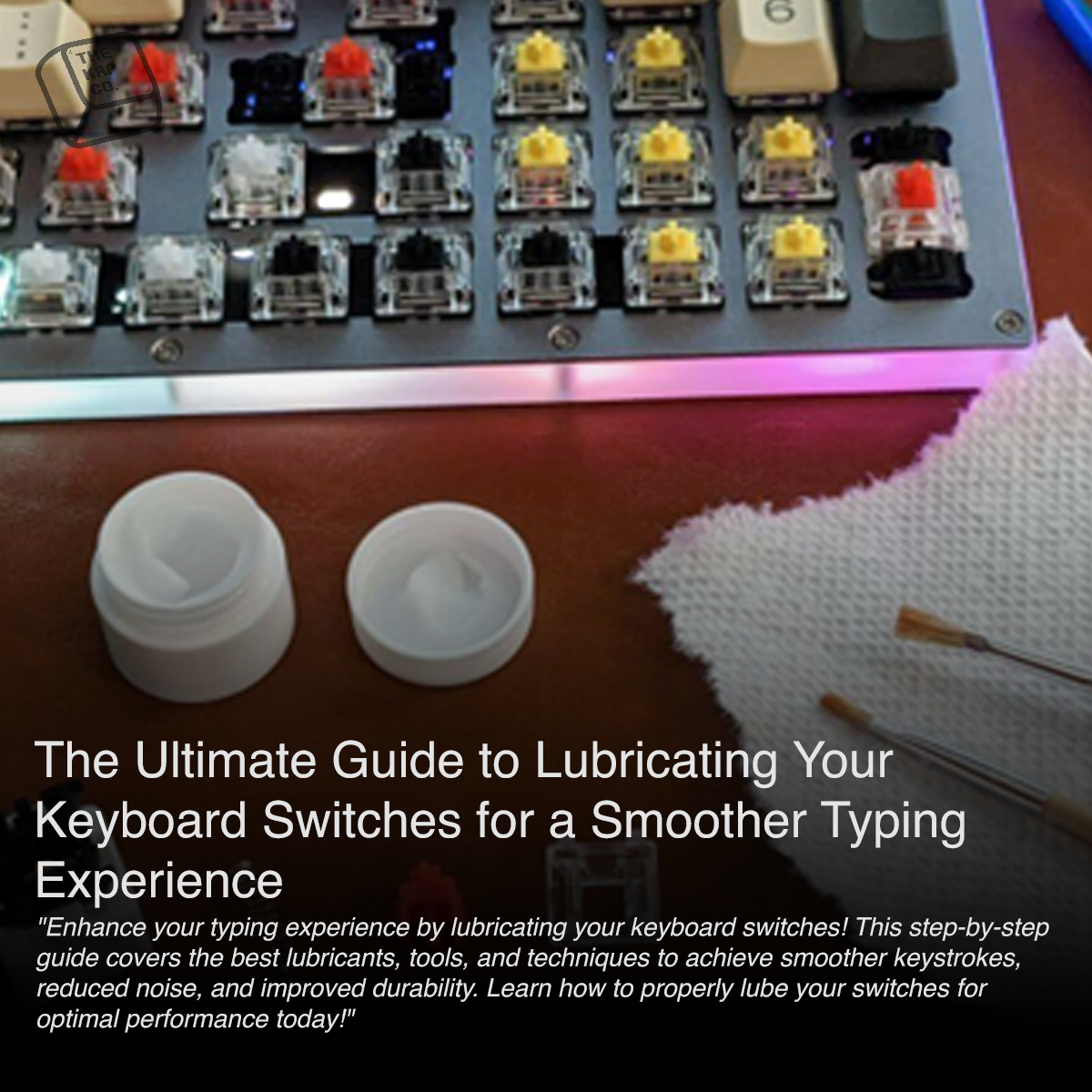
The Ultimate Guide to Lubricating Your Keyboard Switches for a Smoother Typing Experience
The Ultimate Guide to Lubricating Your Keyboard Switches for a Smoother Typing Experience A mechanical keyboard offers a highly satisfying typing experience, but over time, switches can develop friction, causing a scratchy or inconsistent feel. Lubricating your keyboard switches is a simple yet effective way to enhance smoothness, reduce wear and tear, and minimize noise. Whether you're a gamer, programmer, or keyboard enthusiast, this comprehensive guide will take you through the best practices for properly lubricating your keyboard switches. Why Lubricate Your Keyboard Switches? Before diving into the process, let's explore the key benefits of lubricating your switches: Smoother Keystrokes – Lubrication significantly reduces friction, resulting in effortless and fluid key presses. Reduced Noise – A well-lubricated switch minimizes scratchy sounds and key chatter, creating a quieter experience. Enhanced Durability – Regular lubrication prevents premature wear and extends the lifespan of your switches. Customizable Feel – Different lubricants can be used to fine-tune the feel of your keyboard, from ultra-light actuation to a more buttery-smooth response. Choosing the Right Lubricant The type of lubricant you use plays a crucial role in the final feel of your keyboard. Here are some of the best options based on switch type: Linear Switches (Smooth, Silent Experience)Recommended Lubricant: Krytox 205g0 (thick), Tribosys 3204 (lighter alternative) Tactile Switches (Balanced Feedback)Recommended Lubricant: Tribosys 3203 (light viscosity, preserves tactility) Clicky Switches (Not Recommended)Lubrication can reduce or eliminate the click mechanism, so lubing clicky switches is generally avoided. Essential Tools and Materials Before starting, gather these tools to ensure an efficient lubrication process: Keyboard Switch Lubricant (as per switch type) Keycap Puller (for safe removal of keycaps) Switch Puller (to extract switches on hot-swappable boards) Small Brush (Size 00 or 000 for precise application) Tweezers (for handling springs and stems) Switch Opener (for quick switch disassembly) Plastic or Metal Tray (to organize switch parts) Step-by-Step Guide to Lubricating Your Keyboard Switches Step 1: Prepare Your Keyboard Unplug Your Keyboard – Ensure your keyboard is disconnected to avoid electrical damage and ensure a safe working environment. Remove Keycaps – Using a keycap puller, gently pull off each keycap, taking care not to damage the switches underneath. Extract the Switches – If you have a hot-swappable keyboard, use a switch puller to carefully remove the switches. For soldered keyboards, desoldering is required, which can be time-consuming but necessary for proper lubrication. Step 2: Disassemble the Switches Open the Switch – Using a switch opener or a pair of tweezers, carefully pry open each switch to access its internal components. Take your time to avoid damaging the delicate parts. Separate Components – Organize the switch components, including the top housing, bottom housing, stem, and spring. Keeping them in order will make reassembly easier and prevent misplacement. Step 3: Apply Lubricant Correctly Lubricate the Spring – Take a small brush or tweezers, dip it in lubricant, and lightly coat the spring. This helps eliminate any unwanted spring pinging or metallic noises when typing. Lubricate the Stem – Apply a thin and even layer of lubricant to the sides of the stem where it contacts the housing. Avoid applying too much lubricant, as excess can result in a sluggish or mushy keystroke. Lubricate the Bottom Housing – Focus on the slider rails where the stem moves up and down. A small amount of lubricant here reduces friction, improving the overall smoothness of keypresses. Avoid Lubricating Electrical Contacts – Be extra cautious not to get any lubricant on the metal leaf contacts inside the switch, as this can interfere with electrical conductivity and cause malfunctioning. Step 4: Reassemble and Reinstall Switches Reassemble the Switch – Carefully place the stem and spring back into the bottom housing, then secure the top housing in place. Ensure everything clicks together properly to maintain switch integrity. Reinstall Switches – If you have a hot-swappable keyboard, push each switch back into its socket firmly but gently. If your keyboard was desoldered, carefully solder the switches back onto the PCB to ensure proper functionality. Reattach Keycaps – Align each keycap over its respective switch and press down evenly to secure them in place. Step 5: Test and Optimize Reconnect Your Keyboard – Plug in the keyboard and test each key to ensure smooth functionality. Assess Keystroke Feel – Type on your keyboard and check for consistent smoothness across all keys. Make Adjustments If Needed – If some keys still feel rough, consider reapplying lubricant sparingly. Common Mistakes to Avoid Over-Lubrication – Excess lubricant can create a mushy or unresponsive feel. Lubricating Clicky Switches – This can reduce or completely remove the clicky feedback. Applying Lubricant to Metal Contacts – This can cause electrical issues and malfunctioning. Skipping Disassembly – Lubricating switches without disassembling them results in uneven distribution. Frequently Asked Questions (FAQs) Q: How often should I lubricate my keyboard switches?A: Most users find that lubricating switches once every 6-12 months maintains optimal performance. Q: Can I use WD-40 or other household lubricants?A: No, only use high-quality lubricants designed for mechanical keyboards. Q: Will lubrication affect my typing speed?A: Yes, a properly lubricated keyboard can improve responsiveness and typing speed. Conclusion Lubricating your keyboard switches is a game-changer for mechanical keyboard enthusiasts. It enhances typing comfort, reduces noise, and extends the lifespan of your keyboard. By following this step-by-step guide, you can achieve a buttery-smooth typing experience tailored to your preferences. Whether you're a beginner or an advanced user, proper lubrication ensures a premium feel every time you type.
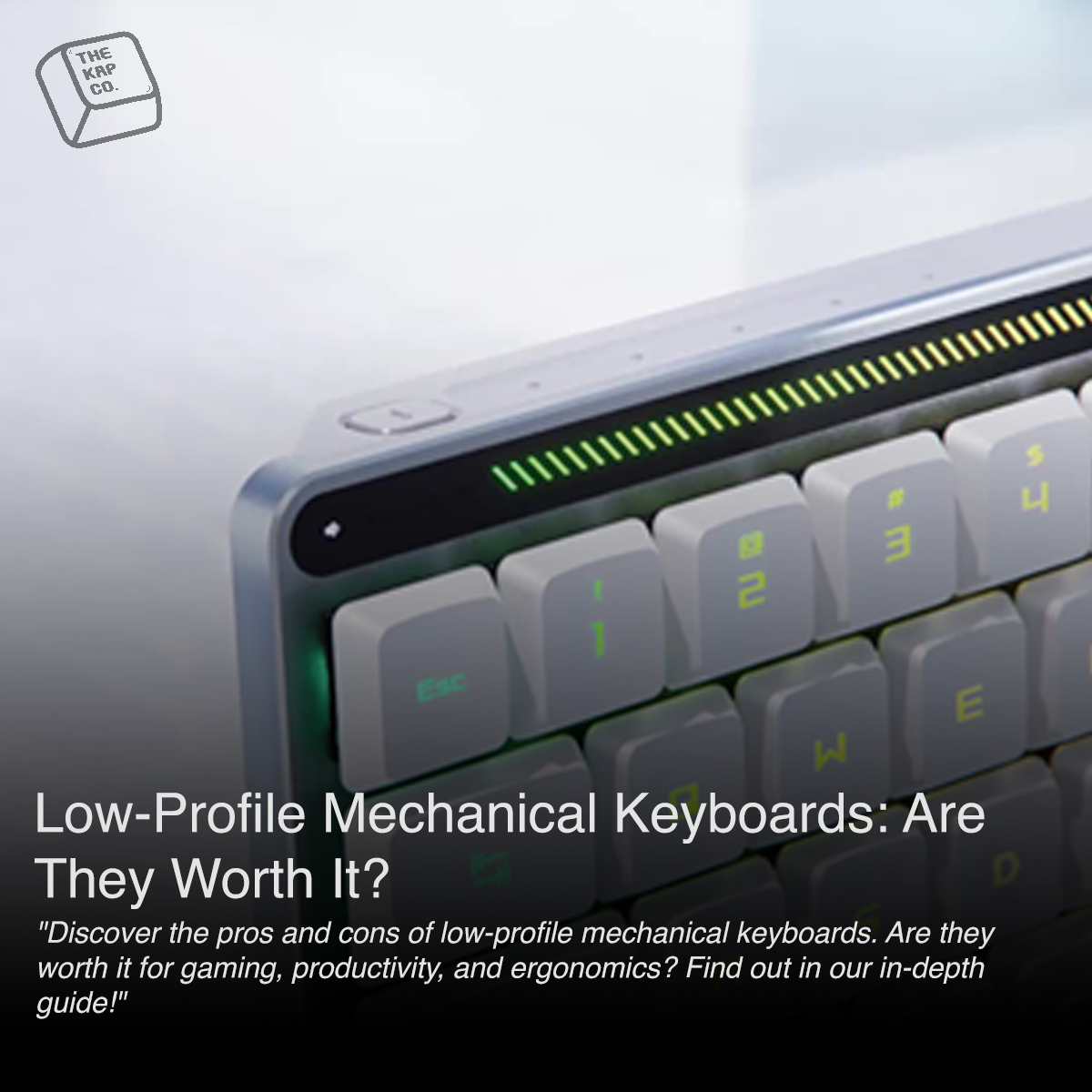
Low-Profile Mechanical Keyboards: Are They Worth It?
Low-Profile Mechanical Keyboards: Are They Worth It? In the world of mechanical keyboards, enthusiasts are always looking for the next best thing—whether it’s improved ergonomics, faster response times, or a sleek design. One innovation that has gained traction in recent years is the low-profile mechanical keyboard. But are these keyboards truly worth the hype? Let’s dive into the pros, cons, and whether they’re the right choice for you. What Is a Low-Profile Mechanical Keyboard? A low-profile mechanical keyboard features a slimmer design with shorter key switches and keycaps compared to traditional mechanical keyboards. These keyboards are designed to provide a mechanical feel while reducing the height and key travel distance, making them more ergonomic and aesthetically pleasing. Key Features of Low-Profile Mechanical Keyboards Shorter Key Travel – Typically around 2.7mm compared to the 4mm travel of standard mechanical switches. Slimmer Design – Ideal for a cleaner desk setup and improved portability. Faster Actuation – Due to reduced key travel, keystrokes register more quickly. Mechanical Feel – Offers tactile or linear switches similar to standard mechanical keyboards. Differences Between Low-Profile and Normal-Profile Mechanical Keyboards Understanding the differences between low-profile and standard mechanical keyboards can help you decide which one suits your needs best. 1. Key Travel and Actuation Low-profile keyboards have a shorter key travel distance (around 2.7mm) compared to normal mechanical keyboards (typically 4mm). Faster actuation speeds make low-profile keyboards ideal for gaming and rapid typing. 2. Size and Portability Low-profile keyboards are thinner and lighter, making them great for minimalistic setups and travel. Normal-profile keyboards, while bulkier, often provide a more traditional and customizable experience. 3. Ergonomics Low-profile keyboards are designed for reduced wrist strain, allowing for a more natural hand position without the need for a wrist rest. Traditional mechanical keyboards may require an additional wrist rest for optimal comfort. 4. Switch Options and Customization Standard mechanical keyboards have a wide range of switch options and keycap choices. Low-profile keyboards have fewer switch options and limited aftermarket keycap support. 5. Typing and Gaming Experience Typists who prefer deep keystrokes and more tactile feedback may lean towards normal-profile keyboards. Gamers looking for faster key presses may benefit from the shorter actuation of low-profile switches. Pros of Low-Profile Mechanical Keyboards 1. Ergonomics and Comfort The lower height of these keyboards reduces wrist strain, making them an excellent choice for long hours of typing or gaming. Many users find them more comfortable compared to traditional mechanical keyboards, which often require a wrist rest. 2. Faster Typing Speed With shorter actuation distances, low-profile mechanical keyboards can improve typing speed. Gamers, in particular, benefit from quicker key presses, reducing input lag and enhancing reaction times in fast-paced games. 3. Sleek and Compact Design Low-profile keyboards are often slimmer and lighter, making them ideal for minimalistic desk setups. They also fit well in travel bags, making them a great choice for professionals on the go. 4. Mechanical Feel in a Slimmer Form Factor For those who love mechanical keyboards but want something less bulky, low-profile keyboards deliver a satisfying typing experience without the heft. Cons of Low-Profile Mechanical Keyboards 1. Limited Switch Options Compared to traditional mechanical keyboards, low-profile options have fewer switch types available. While some brands offer tactile, linear, and clicky variants, they lack the vast customization options of standard mechanical keyboards. 2. Higher Price Tag Low-profile mechanical keyboards are relatively new to the market, and their specialized design often comes at a premium. Budget-conscious users might find traditional mechanical keyboards with similar features at a lower price point. 3. Adjustment Period Users transitioning from traditional mechanical keyboards may need time to adjust to the shorter key travel. Some may find the experience less satisfying if they prefer deep keystrokes with more tactile feedback. 4. Limited Aftermarket Keycap Support Since low-profile keyboards use shorter switches and different stem designs, finding aftermarket keycaps can be challenging compared to standard mechanical keyboards. Are Low-Profile Mechanical Keyboards Worth It? Low-profile mechanical keyboards are an excellent option for users who prioritize ergonomics, speed, and portability. They are especially beneficial for gamers and professionals who need a comfortable yet responsive keyboard. However, if you’re a mechanical keyboard enthusiast who enjoys deep keystrokes and extensive customization, a traditional mechanical keyboard might be the better choice. Who Should Buy a Low-Profile Mechanical Keyboard? ✅ Gamers looking for faster response times✅ Professionals needing a sleek, ergonomic keyboard✅ Minimalists who prefer a clean and modern desk setup✅ Frequent travelers who need a lightweight yet durable keyboard Who Might Want to Stick to a Traditional Mechanical Keyboard? ❌ Enthusiasts who enjoy deep key travel and strong tactile feedback❌ Users who frequently customize their keycaps and switches❌ Those looking for a more budget-friendly mechanical keyboard option How to Choose a Low-Profile Mechanical Keyboard If you're considering a low-profile mechanical keyboard, here are some key factors to consider: 1. Switch Type Low-profile keyboards come with different switch types, including tactile, linear, and clicky. Choose based on your preference for feedback and sound. 2. Build Quality Look for a durable frame, preferably aluminum or high-quality plastic, to ensure longevity and a premium feel. 3. Connectivity Options Decide between wired, wireless, or Bluetooth connectivity depending on your needs for portability and convenience. 4. Keycap Material and Layout Some low-profile keyboards have unique keycap designs. Ensure the layout suits your typing style and that keycaps are replaceable if needed. 5. Additional Features Consider backlighting, macro support, and software customization options to enhance your typing or gaming experience. Frequently Asked Questions (FAQ) 1. Are low-profile mechanical keyboards good for gaming? Yes! Low-profile mechanical keyboards offer faster actuation and shorter key travel, making them great for gaming, especially in fast-paced genres like FPS and MOBA. 2. Do low-profile mechanical keyboards feel different from normal mechanical keyboards? Yes, they have a shorter key travel distance, which makes typing and gaming feel faster but may lack the deep keystroke sensation of traditional mechanical keyboards. 3. Can I replace the keycaps on a low-profile mechanical keyboard? It depends on the brand and switch type. Many low-profile keyboards have unique keycap sizes, making aftermarket keycap replacements more limited than standard mechanical keyboards. 4. Are low-profile keyboards better for ergonomics? Yes, their slimmer design reduces wrist strain, promoting a more natural hand position without requiring a wrist rest. 5. Do low-profile keyboards cost more than regular mechanical keyboards? Generally, yes. Their specialized design and newer technology often result in a higher price tag compared to traditional mechanical keyboards with similar features. Conclusion Low-profile mechanical keyboards blend speed, comfort, and a modern aesthetic into one package. While they might not be for everyone, they offer a compelling option for users looking for a mechanical feel in a more compact design. If these benefits align with your needs, investing in a low-profile mechanical keyboard might just be worth it! Related Articles Best Low-Profile Mechanical Keyboards in 2025 Mechanical vs. Low-Profile Keyboards: Which One Should You Choose?

How RGB Lighting Enhances Your Typing & Gaming Experience
How RGB Lighting Enhances Your Typing & Gaming Experience Introduction to RGB Lighting RGB lighting has revolutionized the world of gaming peripherals, offering both aesthetic appeal and functional benefits. By integrating customizable lighting into keyboards, users can enhance their gaming and typing experiences with visually stunning effects and improved usability. Whether you are a professional gamer or a casual typist, an RGB keyboard can elevate your setup to the next level. What is an RGB Keyboard? An RGB keyboard is a type of keyboard equipped with LED lights that can produce a wide range of colors, typically using red, green, and blue light to create millions of color combinations. Unlike traditional single-color backlit keyboards, RGB keyboards allow users to customize lighting effects, sync with games, and even create unique profiles for different applications. How Do RGB Keyboards Work? RGB keyboards use individual LEDs placed under each key, controlled by onboard software or dedicated applications. Users can program these LEDs to change colors, create dynamic effects, and even react to keystrokes or in-game events. Advanced RGB keyboards offer per-key lighting customization, allowing for even greater personalization. History and Evolution of RGB Keyboards The concept of backlit keyboards started with simple monochrome lighting. Over time, manufacturers introduced multi-color LEDs, leading to the development of full RGB keyboards in the early 2010s. Today, RGB keyboards have become a staple in gaming setups, featuring advanced lighting technology, integration with gaming software, and AI-driven lighting synchronization. Essential Benefits of RGB Lighting RGB lighting offers multiple advantages beyond aesthetics, including: Improved visibility: RGB backlighting helps users see keys clearly in low-light environments, reducing typing errors and enhancing overall productivity. Enhanced gaming experience: Dynamic lighting effects can improve reaction times, highlight essential keys, and create an immersive gaming atmosphere. Customization: Users can personalize their keyboard’s lighting effects, matching their gaming setup or workspace theme. Mood setting: RGB lighting can create an ambient experience, making long typing or gaming sessions more enjoyable. Syncing with other peripherals: Many RGB keyboards can sync with mice, headsets, and even PC cases, providing a cohesive lighting experience. Customizable Lighting Effects for Gaming One of the biggest advantages of RGB keyboards for gamers is the ability to customize lighting effects. Many gaming keyboards come with preset modes for different game genres, such as FPS, MOBA, or RPG, highlighting crucial keys for better in-game performance. Some models also support reactive lighting, where keys change color in response to in-game actions. Personalized Key Mapping and Macros RGB keyboards often come with software that allows users to remap keys and create macros. This feature is particularly useful for gamers and programmers, enabling them to execute complex commands with a single keystroke. The lighting can also indicate specific key bindings, improving efficiency and gameplay performance. Expressing Personal Style with RGB Keyboards Beyond gaming functionality, RGB keyboards let users express their individuality. Whether you prefer a subtle gradient, a pulsating rainbow effect, or a color scheme matching your desktop setup, an RGB keyboard can enhance the aesthetics of your workspace. Ergonomic Considerations in RGB Keyboard Design RGB keyboards are often designed with ergonomics in mind. Many feature adjustable backlighting to reduce eye strain in low-light environments, wrist rests for added comfort, and tactile key switches that improve typing accuracy and speed. Some keyboards also offer customizable brightness levels to suit different lighting conditions. Popular RGB Keyboard Brands and Models There are several well-known brands that produce high-quality RGB keyboards, including: Razer (Razer Huntsman Elite, Razer BlackWidow V4 Pro) Corsair (Corsair K100 RGB, Corsair K70 RGB Pro) Logitech (Logitech G915 Lightspeed, Logitech G Pro X) SteelSeries (SteelSeries Apex Pro, SteelSeries Apex 7) HyperX (HyperX Alloy Elite 2, HyperX Alloy Origins Core) Each brand offers unique features such as different switch types, customizable lighting profiles, and software support for enhanced customization. Cleaning and Care Tips for RGB Keyboards To maintain the longevity and performance of an RGB keyboard, regular cleaning is essential. Here are some tips: Dust removal: Use a can of compressed air to remove dust from between the keys. Keycap cleaning: Remove keycaps and clean them with a mild soap solution. Surface cleaning: Wipe the keyboard with a microfiber cloth and isopropyl alcohol. Avoid spills: Keep liquids away from your keyboard to prevent damage to the internal components. Software updates: Regularly update the keyboard firmware and lighting software to ensure optimal performance. The Downsides of an RGB Monitor or TV with Ambient Light While RGB lighting can enhance keyboards and gaming setups, using RGB lighting on monitors or TVs may have some downsides: Distraction: Bright and dynamic RGB lights can be overwhelming and distracting, especially during intense gaming sessions or movie watching. Eye strain: Overly bright ambient lighting from RGB monitors or TVs can cause discomfort or fatigue, particularly in dark rooms. Color accuracy issues: RGB lighting around a screen may interfere with color perception, making it difficult to enjoy content as intended by the creators. Increased power consumption: RGB lighting can add to electricity usage, particularly if it is always enabled at high brightness settings. The Future of RGB Lighting in Keyboards and Gaming Setups As technology continues to evolve, RGB lighting in keyboards and gaming setups is expected to become even more advanced. Future innovations may include: AI-driven lighting adaptation: Smart RGB keyboards that adjust lighting based on user activity, mood, or game genre. Eco-friendly lighting solutions: Energy-efficient LED technologies that reduce power consumption. Haptic feedback integration: Combining RGB lighting with touch-sensitive feedback for a more immersive typing and gaming experience. Wireless synchronization: Seamless connectivity between RGB peripherals, ensuring a uniform lighting experience across devices. Conclusion RGB lighting is more than just a flashy addition to keyboards; it enhances gaming performance, improves typing accuracy, and adds a personal touch to any setup. Whether you are a gamer, programmer, or casual user, investing in an RGB keyboard can significantly elevate your experience. With customizable effects, ergonomic design, and a wide range of options available, there's an RGB keyboard suited for everyone. However, while RGB lighting enhances keyboards, users should be mindful of potential downsides when applying it to monitors and TVs, ensuring a balanced and comfortable setup.
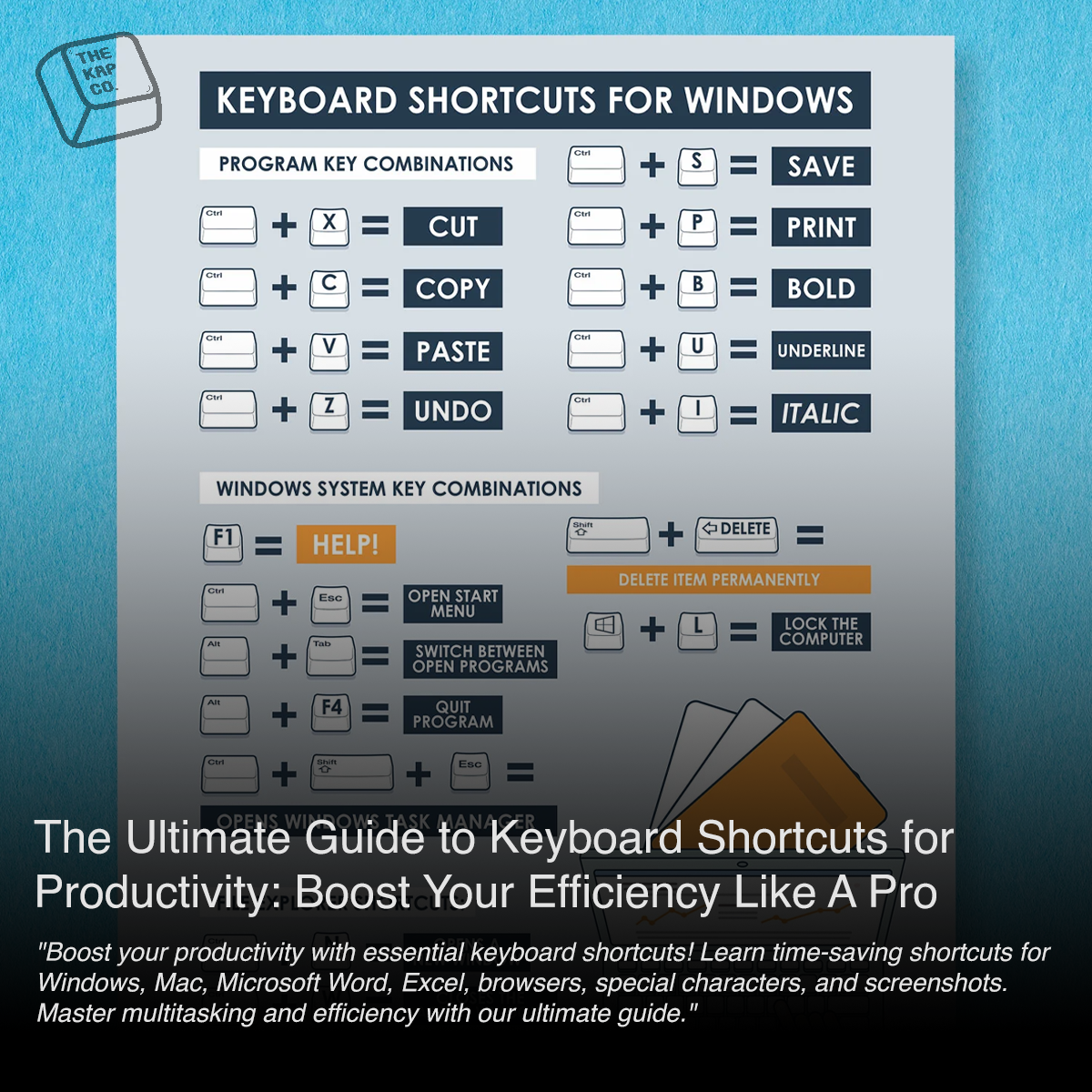
The Ultimate Guide to Keyboard Shortcuts for Productivity
The Ultimate Guide to Keyboard Shortcuts for Productivity: Boost Your Efficiency Like A Pro Why Are Keyboard Shortcuts Important? Keyboard shortcuts are essential tools for enhancing efficiency and workflow. They minimize the need to navigate menus, reducing the time spent switching between the keyboard and mouse. Here are some key benefits of using keyboard shortcuts: Time-Saving – Performing tasks with shortcuts is significantly faster than using a mouse. Increased Productivity – Reducing repetitive actions helps users focus on critical tasks. Ergonomic Benefits – Minimizing mouse usage can help reduce strain on the wrist and fingers, decreasing the risk of repetitive strain injuries (RSI). Enhanced Accuracy – Shortcuts allow for precision, avoiding missclicks and accidental selections. Multi-Tasking Improvement – Switching between tasks quickly without losing momentum boosts efficiency, especially for professionals handling multiple applications. Reduced Cognitive Load – Fewer manual steps mean fewer distractions, helping you stay focused. Universal Application – Many shortcuts work across different software, making them invaluable in various workflows. What Are Keyboard Shortcuts? Keyboard shortcuts are key combinations that perform specific tasks quickly, reducing the need for mouse clicks and improving efficiency. By learning essential shortcuts, you can navigate software and complete tasks faster, ultimately boosting productivity in personal and professional settings. General Keyboard Shortcuts Here are some universally useful keyboard shortcuts: Ctrl + C (Cmd + C on Mac) – Copy Ctrl + X (Cmd + X) – Cut Ctrl + V (Cmd + V) – Paste Ctrl + Z (Cmd + Z) – Undo Ctrl + Y (Cmd + Shift + Z) – Redo Ctrl + A (Cmd + A) – Select all Ctrl + S (Cmd + S) – Save Ctrl + P (Cmd + P) – Print Alt + Tab (Cmd + Tab) – Switch between open applications Ctrl + F (Cmd + F) – Find text in a document or webpage Ctrl + Shift + Esc – Open Task Manager (Windows) These shortcuts help streamline tasks across various applications and operating systems. Microsoft Word Keyboard Shortcuts For those working with documents, these shortcuts are invaluable: Ctrl + B – Bold text Ctrl + I – Italicize text Ctrl + U – Underline text Ctrl + P – Print document Ctrl + Home – Move to the beginning of the document Ctrl + End – Move to the end of the document Ctrl + H – Find and replace text Ctrl + Shift + C – Copy formatting Ctrl + Shift + V – Paste formatting Ctrl + Shift + > / < – Increase or decrease font size Microsoft Excel Keyboard Shortcuts Excel users can speed up data management with these shortcuts: Ctrl + N – Create a new workbook Ctrl + Shift + L – Toggle filters on/off Ctrl + Enter – Fill selected cells with the same data F2 – Edit the active cell Alt + = – AutoSum selected cells Ctrl + Page Up/Page Down – Switch between worksheet tabs Ctrl + Shift + + – Insert new row or column Ctrl + - – Delete selected row or column Ctrl + Shift + " – Copy value from the cell above Ctrl + Shift + $ – Apply currency format Boost Your Efficiency with Website Browser Shortcuts Navigating web browsers is quicker with these shortcuts: Ctrl + T – Open a new tab Ctrl + W – Close the current tab Ctrl + Shift + T – Reopen the last closed tab Ctrl + L – Highlight the URL bar Ctrl + D – Bookmark the current page Ctrl + F – Find text on the current page Ctrl + Shift + Del – Open clear browsing data menu Ctrl + Tab / Ctrl + Shift + Tab – Switch between browser tabs F5 / Ctrl + R – Refresh page Ctrl + Shift + N – Open incognito/private browsing mode Windows Shortcuts For Windows users, these shortcuts enhance workflow: Win + D – Show desktop Win + L – Lock computer Win + Shift + S – Capture a custom screenshot Win + Tab – Open Task View Alt + F4 – Close the active window Win + E – Open File Explorer Win + R – Open the Run dialog box Win + I – Open Windows Settings Win + Shift + M – Restore minimized windows Win + V – Open clipboard history Keyboard Shortcuts for Special Characters Typing special characters can be tedious without these shortcuts: Alt + 0151 – Em dash (—) Alt + 0176 – Degree symbol (°) Alt + 0252 – ü (U umlaut) Alt + 0241 – ñ (Spanish letter N) Alt + 0169 – Copyright symbol (©) Alt + 0174 – Registered trademark symbol (®) Alt + 0134 – Dagger symbol (†) Alt + 0223 – ß (German Eszett) Shortcuts for Taking Screenshots Screenshots are useful for documentation and troubleshooting. Use these shortcuts: Win + PrtScn – Capture entire screen and save to Pictures folder Alt + PrtScn – Capture active window Win + Shift + S – Open Snipping Tool for custom screenshots Ctrl + V – Paste captured screenshot into an image editor Mac: Cmd + Shift + 4 – Capture a selected area Customizing Keyboard Shortcuts Many applications allow users to create custom shortcuts to enhance efficiency further: Microsoft Office – Users can set custom shortcuts via the Options menu. Adobe Photoshop – Shortcut settings can be customized under Edit > Keyboard Shortcuts. Windows and macOS – Both operating systems allow users to create custom shortcuts for specific commands. AutoHotkey (Windows) – Allows users to create automation scripts and custom hotkeys. Enhancing Productivity Beyond Keyboard Shortcuts While shortcuts can significantly improve efficiency, consider these additional productivity strategies: Use productivity apps like Trello, Notion, or Todoist for task management. Customize shortcuts to suit your workflow in programs that allow customization. Optimize workspace setup with dual monitors and ergonomic tools. Practice time management techniques like the Pomodoro Technique for focused work sessions. Conclusion Mastering keyboard shortcuts can drastically improve your efficiency, whether you're working with documents, spreadsheets, browsers, or your operating system. By incorporating these shortcuts into daily tasks, you can save time and enhance productivity effortlessly.